Information
- Home
- health

The average cat's weight is typically between 8 and 12 pounds,with most cats weighing around 10 pounds.However,a cat's weight varies significantly depending on factors such as breed,age,and lifestyle.
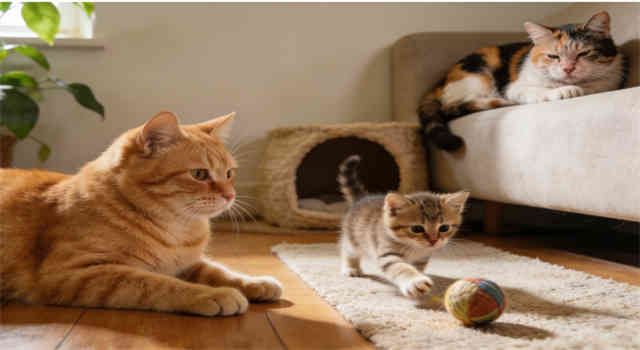
Understanding your cat's ideal weight is crucial for maintaining their long-term health.Clinical data shows that overweight or obese cats have a significantly increased risk of developing diabetes,urinary tract diseases,arthritis,and other conditions,and their lifespan is correspondingly shortened.These cats usually need to be fed specially formulated weight-loss cat food,such as IAMS Active Health's Healthy Weight series cat food.If a cat is underweight or experiences unexplained weight loss,it may be a sign of serious health problems or diseases and requires immediate attention.
Determining your cat's ideal weight and regularly monitoring its weight is important.If a cat's weight deviates from the ideal range,a veterinarian can help the cat regain a healthy weight by adjusting its lifestyle or diet,depending on its specific situation.
Average Weight Range for Cats
Generally,the ideal weight for a healthy cat is 8-12 pounds,with most cats maintaining a weight around 10 pounds.
It's important to note that there are significant individual differences in the body size of healthy cats,and their weight will vary accordingly.A cat's health status cannot be fully determined solely by its weight;it's necessary to consider factors such as bone structure,lean muscle mass,and other indicators to comprehensively assess its healthy weight level.
The most scientific way to determine if a cat's weight is healthy is to consult a veterinarian.A veterinarian will consider various factors such as the cat's bone structure,muscle mass,and breed to determine its specific ideal healthy weight.
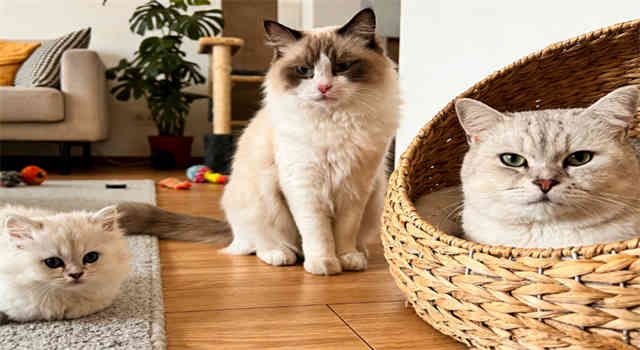
Annual checkups effectively monitor a cat's weight changes throughout adulthood and senior years,ensuring it remains within a healthy range.
Main Factors Affecting Cat Weight
I.Breed
Different breeds of cats exhibit significant differences in body size,and their healthy weight ranges also vary.
Some breeds of cats have slender,delicate bodies and refined features,such as the Abyssinian cat.These smaller breeds can have a healthy weight as low as 6-8 pounds(approximately 2.7-3.6 kg).
Maine Coons were bred to be medium to large in size,with broad chests and robust features.As large cats,their healthy weight is typically:males can exceed 20 pounds,while females are between 10-14 pounds.
Cat Weight Chart:Average Weight of Common Breeds
Cat Breed
Average Weight
Maine Coon
12-20 lbs+(Male),10-14 lbs(Female)
Persian Cat
9-14 lbs(Male),7-11 lbs(Female)
Siamese Cat
8-12 lbs(Male),5-8 lbs(Female)
Abyssinian Cat
7-10 lbs(Male),6-8 lbs(Female)
Bengal Cat
9-15 lbs(Male),6-12 lbs(Female)
Domestic Shorthair Cat
8-12 lbs,average 10 lbs(Male and Female)
II.Age
A cat's age and life stage are important factors affecting its weight.
During kittenhood,kittens are in a rapid growth and development stage,and their weight increases rapidly,which is a normal physiological growth process.Kittens grow fastest in the first few months after birth,then their growth rate gradually slows down between 6 and 12 months of age.
Adult cats stop growing and reach sexual maturity around one year of age.Due to a slower metabolic rate and a sedentary lifestyle,their likelihood of becoming obese increases significantly.
Regular annual checkups for cats help veterinarians assess their weight and physical condition in a timely manner,identifying potential problems early.
Senior cats may experience weight loss due to conditions such as kidney disease and hyperthyroidism.Unplanned weight loss is an important warning sign of poor feline health;therefore,it is necessary to closely monitor the weight of senior cats to ensure they remain at a healthy level.
III.Spaying/Neutering
After a cat is spayed/neutered,its hormone levels decrease,leading to increased appetite and a significantly higher risk of obesity.
Related studies have shown that after spaying/neutering,cats lack hormones that regulate appetite,resulting in a significant increase in food intake.If this is not controlled,it can lead to weight gain and negatively impact their health.
After spaying/neutering,most cats need to reduce their calorie intake by about 30%.It is recommended to consult a veterinarian and take your cat for regular checkups to ensure they maintain a healthy,lean physique while receiving an appropriate diet and calorie intake.
IV.Sex
Similar to most animals,male cats are generally larger than female cats,especially if the male is fully mature before spaying/neutering,this size difference is more pronounced.The average weight for both male and female cats is between 8-12 pounds,but the exact weight will vary depending on the cat's bone structure,breed,and activity level.
Cat Body Condition Score:A Standard for Veterinarians to Assess a Cat's Healthy Weight
To comprehensively consider all variables such as body size,lean muscle mass,breed,activity level,and lifestyle,and to make weight assessment more objective and standardized,the veterinary industry has developed the Cat Body Condition Score(BCS).
This body condition rating scale uses a 9-point scale to assess a cat's body condition,where 9 points represents morbid obesity and 1 point represents extreme emaciation.Ideally,a cat's body condition score should be between 4 and 5 points,corresponding to a reasonable body fat percentage and meeting the physiological health standards for cats.
When using this body condition rating scale,a physical examination and visual assessment of the cat are required.The specific operating methods are as follows:
-Palpation assessment:Gently stroke the cat's ribs.Under normal circumstances,the ribs should be easily palpable without needing to penetrate a thick layer of fat.The recommended thickness of fat coverage on the ribs is approximately 1-2 mm.
-Top-down assessment:Stand directly above the cat and observe from below.The cat's body should be slightly hourglass-shaped,with the ratio of the widest part of the chest to the narrowest part of the waist approximately 1.5:1.The abdomen should be slightly constricted behind the ribs,and the angle of the waist concavity should be between 120-150 degrees.
-Side View Assessment:When observing the cat from the side,its body should only be slightly tucked behind the ribs,with minimal abdominal fat pads.There should be moderate abdominal contraction from the end of the sternum to the anterior edge of the pelvis,and the distance between the abdominal wall and the ground should not be less than 2 cm(standing position).
For accurate assessment of the cat's body condition score,it is recommended to consult a professional veterinarian for a comprehensive judgment based on clinical experience.
How to Weigh and Monitor Your Cat's Weight at Home
Veterinarians recommend the following two methods for conveniently weighing your cat at home:
1.Using a baby scale or a professional pet scale:Place a soft,non-slip mat or towel on the scale surface to increase the cat's comfort and prevent resistance due to a slippery surface,ensuring accurate weighing results.
2.Using a human scale:First,weigh yourself separately and record your weight.Then,lift your cat and stand on the scale together,recording the total weight of both of you.Finally,subtract your own weight from the total weight to obtain the cat's weight.
Here are four tips to help owners effectively track their cat's weight changes:
-Establish a monitoring record,meticulously documenting your cat's weight data and body condition score.
-Weigh your cat every 2-4 weeks at home or at the veterinary clinic to ensure data continuity.
-Reassess your cat's body condition score every 2-4 weeks to promptly identify any changes.
-Take photos of your cat standing in top and side views to compare changes in body shape over time and visually determine if there are any weight abnormalities.