Information
- Home
- others
Rabbits are excellent family companion animals,but like other pets,their healthy growth requires careful feeding and care.This includes regular veterinary checkups,providing a nutritionally balanced diet,arranging suitable interactive activities,and providing a spacious and comfortable living environment.
Rabbits'teeth have a unique physiological structure,requiring targeted care to prevent various dental diseases.Fortunately,maintaining a rabbit's dental health is not difficult if the owner learns some relevant knowledge,follows scientific feeding methods,and works closely with the veterinarian.
The structure of a rabbit's teeth has significant uniqueness and adaptability,as detailed below:
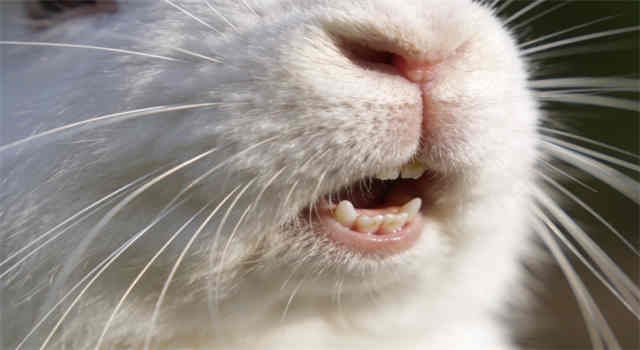
A rabbit's front teeth consist of six incisors:four upper incisors and two lower incisors.These incisors are the core organs for grasping and chewing food,crucial to its eating behavior.Unlike most mammals,rabbits do not have canines.
The cheek teeth consist of premolars and molars,located on both sides of the mouth.Their main function is to grind food,facilitating digestion and absorption by the gastrointestinal tract.In a healthy rabbit's mouth,the upper and lower incisors naturally touch when closed,while the cheek teeth do not always remain in contact.
A rabbit's eating process follows a specific pattern:first,it uses its incisors to grasp and cut food,then transfers the food to its cheek teeth,where it grinds the food through lateral chewing movements.During this process,the upper and lower incisors temporarily separate.
Anatomically,the portion of the tooth directly visible above the gum line is called the crown,and early signs of various dental diseases often appear in the crown.The portion of the tooth below the gum line is called the root,which requires X-ray examination for clear observation.It is important to note that both the crown and root of a rabbit's teeth can develop health problems and require close monitoring.
Through natural evolution,rabbits have developed a diet primarily composed of foods rich in roughage,including hay,succulents,and dried plants.Continuous chewing naturally wears down the teeth,a crucial process because rabbit teeth have the characteristic of lifelong growth.
Without continuous chewing and wear,a rabbit's teeth will gradually grow too long,eventually preventing it from eating normally.Statistics show that rabbits'teeth grow at a rate of approximately 3 millimeters per week,a continuous growth characteristic perfectly suited to their natural dietary habits.To ensure normal tooth wear and prevent dental problems,rabbits need to maintain a near-constant chewing state.
Here are some scientifically effective methods for maintaining dental health:
-Hay Feeding:Provide rabbits with ample high-quality hay,such as Oxbow®Timothy hay or mixed orchard hay.Hay not only wears down teeth through chewing but also promotes gastrointestinal motility,maintaining digestive health,making it an indispensable core ingredient in a rabbit's daily diet.
-Vegetable Supplementation:Provide rabbits with an appropriate amount of fresh and suitable leafy green vegetables daily,such as kale,dandelion leaves,lettuce,bok choy,chicory,and endive,to enrich their diet and further increase chewing frequency.
-Rabbit Powder Supplementation:A small amount of high-quality rabbit pellets can be added to the rabbit's diet as a nutritional supplement,but the feeding amount must be strictly controlled to avoid overfeeding and insufficient chewing.
-Chewing Toys:Provide your rabbit with veterinarian-approved,safe chewing toys.These help maintain their mental activity,alleviate boredom,and provide additional chewing opportunities.Ensure the toys are free of any chemical treatments,especially wooden toys,to prevent contact with harmful chemicals and potential health problems if ingested.
As with other pets,rabbits require a comprehensive veterinary check-up at least annually.During this check-up,the veterinarian will thoroughly examine the rabbit's teeth to assess for abnormalities such as overgrown or misaligned teeth.
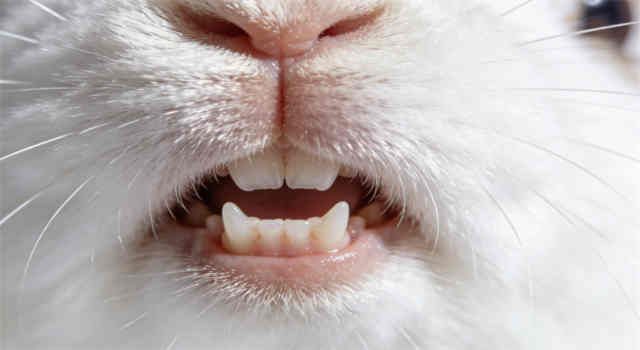
If you have some physical ability,you can try gently examining your rabbit's incisors at home.This helps you become familiar with normal dental morphology and allows for early detection of any abnormalities.Here's how:
Sit on the floor and gently hold the rabbit on your lap.Wrap the rabbit's body in a clean towel,leaving only its head exposed to keep it calm and prevent it from struggling or jumping and injuring itself.Then,carefully lift the rabbit's lips with your fingers or a tongue depressor to observe the shape of the incisors and the condition of the gums.It's important to clarify that most owners can only observe the incisors at home;examination of the premolars and molars must be performed by a professional veterinarian using specialized equipment.
Early detection of dental diseases is crucial for problem-solving and can effectively prevent minor issues from developing into serious health problems.If the rabbit shows signs of tension or struggle during the examination,do not force the procedure.Always prioritize the rabbit's health and comfort,and consult a veterinarian promptly for professional help.
Overgrown teeth are one of the most common dental problems in rabbits,and their occurrence is influenced by several factors,including:
-Genetic factors:Long-term selective breeding may lead to jaw misalignment in rabbits,affecting normal tooth wear.Lop-eared rabbit breeds with shorter lower jaws(such as Netherland Dwarf and Mini Lop)have a significantly higher probability of dental problems than other breeds.
-Trauma factors:Falls,vigorous play,or any facial injuries can cause teeth to break or loosen.In such cases,immediate veterinary treatment is necessary to prevent further deterioration.
-Dietary Factors:Hay is a core component of a rabbit's diet,and insufficient hay supply is a major contributing factor to misaligned and overgrown teeth.A diet solely fed rabbit pellets,due to the soft texture of the pellets,requires minimal chewing,easily leading to insufficient tooth wear and overgrowth.It is crucial that rabbits have constant access to hay;feeding only pellets greatly increases the risk of overgrown teeth—because pellets are easily broken and swallowed without much chewing.
-Other Factors:Various diseases affecting bone health can cause loose teeth in rabbits,indirectly affecting normal tooth growth and wear.
Owners may observe various dental symptoms in their rabbits,but because rabbits are prey animals with an instinct to hide illness,regular home checkups and veterinary follow-ups are essential.Common symptoms of dental disease in rabbits include:
-Weight loss,loss of appetite,or a significant decrease in appetite;
-Difficulty eating,including difficulty holding and chewing food;
-Protruding eyeballs,often caused by root problems(such as infection or overgrown teeth pressing on the eyeball);
-Increased tear production,as the roots of the incisors are close to the tear ducts,and root inflammation or dental abnormalities can lead to tear duct blockage;
-Increased nasal discharge,often caused by sinus congestion due to root inflammation or infection;
-Frequent teeth grinding,often a sign of tooth pain;
-Swelling of the lower jaw and increased salivation;
-If insufficient nutrition is ingested for a prolonged period,diarrhea may occur,eventually leading to dehydration,manifesting as lethargy and difficulty moving.
When incisors overgrow,the upper and lower incisors may not occlude properly,resulting in lateral growth,uneven length,etc.The teeth are usually long and thin,and some may have sharp edges or broken fragments.
Examination and treatment of overgrown cheek teeth must be performed by a professional veterinarian using specialized instruments(such as an mouth opener to gently open the rabbit's mouth and provide ample light).Healthy cheek teeth should have flat occlusal surfaces,enabling normal food grinding through normal biting;however,overgrown cheek teeth may form sharp cusps or abnormal shapes,hindering normal chewing.In severe cases,the teeth may develop spiky or wavy protrusions,further exacerbating chewing difficulties.
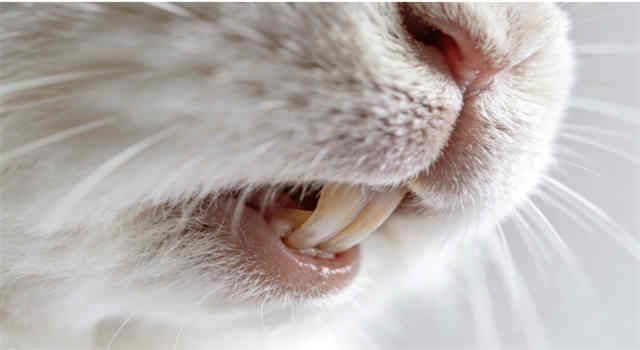
While some owners may consider trimming their rabbits'teeth themselves,this is extremely risky and therefore strictly prohibited.
Ordinary tools(such as nail clippers)apply pressure to the teeth during trimming,easily causing breakage and leading to pain,infection,and other health problems.Currently,such unprofessional trimming methods are considered inappropriate and inhumane because they cause unnecessary pain to rabbits.
Safe trimming of rabbit teeth must be performed under anesthesia or sedation.After sedation,the veterinarian can assess the health of the tooth root using X-rays and check for potential abnormalities around the tooth.Then,using specialized equipment such as high-speed dental tools,a precise cut is made with minimal pressure.In some cases,the veterinarian may use Dremel®tools,but these are time-consuming and may require applying pressure.The core principle during trimming is to avoid damaging the pulp chamber to prevent pain and infection.
In cases of severe tooth damage,complete extraction may be necessary.If extraction is the best treatment option for the rabbit's condition,the veterinarian will explain the procedure,risks,and post-operative care to the owner in detail.
For issues such as overgrown cheek teeth,anesthesia is a necessary part of the treatment.The veterinarian will use a flat drill to smooth out any sharp points or abnormal tooth shapes that obstruct chewing,restoring the cheek teeth's normal occlusion and molar function.
It is important to emphasize that with proper daily dental care and regular veterinary checkups,the vast majority of rabbits can maintain healthy teeth and do not require trimming.